
Infosys — The Seven Engineers and Sudha Murty’s ₹10,000 Loan

In the summer of 1981, seven software engineers sat on the floor of a cramped one-bedroom flat in Pune and decided to build a company. They had no office. No computer. No salary. Not even a phone line. What they had was ₹10,000 borrowed from the founder’s wife — and a thesis that India, in 1981, had no reason to believe.
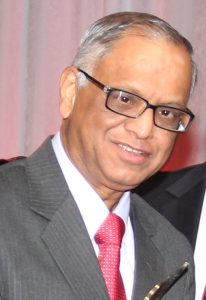
Model Colony, Pune: July 1981
The flat is on the third floor of a nondescript building in Model Colony, Pune. It belongs to N. R. Narayana Murthy, a 35-year-old software engineer who has just quit his job as head of software at a company called Patni Computer Systems. His wife, Sudha Murty, is a pioneer herself — one of the first female engineers TELCO has ever hired — and she is six months pregnant.
On that July afternoon, Narayana Murthy gathers six colleagues around his dining table: Nandan Nilekani, N. S. Raghavan, S. Gopalakrishnan (Kris), S. D. Shibulal, K. Dinesh, and Ashok Arora. They are all in their late twenties and early thirties. They are all middle-class. None of them come from business families.
Murthy has sketched a one-page business plan. The idea is audacious: write software in India for American companies. In 1981, there is no internet, no email, no Indian telecom infrastructure worth speaking of, and foreign exchange is so strictly rationed that Murthy himself cannot legally hold more than $500. The import duty on a mainframe computer is 135%. Every international phone call needs a trunk booking with the Department of Telecommunications and a 4-hour wait.
Murthy proposes that Infosys will earn in dollars while paying salaries in rupees — a model he later calls “our natural hedge against India’s mess.” The others agree on one condition: no founder will ever cheat another, and every hire will be treated as a partner.
Initial capital: ₹10,000. Which Murthy does not have.
The ₹10,000 That Sudha Murty Quietly Gave
The money, it turns out, comes from Sudha Murty’s personal savings. She hands Narayana Murthy ₹10,000 in cash — money she had been setting aside for her own emergencies — with a single instruction: “Try for three years. If it does not work, come back and I will support the family.”
This detail, omitted from almost every official Infosys history, is the reason the company exists. Without it, there is no seed capital. Without the seed capital, the seven partners cannot even register the company with the Registrar of Companies in Pune.
“My wife gave me my first round of funding. The term sheet was three words long: ‘Just don’t fail.'”
— Narayana Murthy, decades later
On 2 July 1981, Infosys Consultants Pvt. Ltd. is incorporated at the Pune Registrar of Companies. The registered address is Murthy’s flat. The paid-up capital is ₹10,000. The business activity description is four words long: “software development and export.”
Three Years of Near-Collapse
What most people do not know about Infosys is how close it came to ending in 1990.
By then, Infosys has moved from Pune to Bangalore, has built a small client roster in the US, and has exactly one serious competitor: a Mumbai firm run by an enterprising founder who keeps trying to poach Infosys’ engineers. The Indian IT industry is a nobody globally. Total Indian software exports in 1989 are around $100 million — less than a decent New Jersey systems integrator earns in a single quarter.
In 1990, the company reaches a board-level crisis. One of the seven founders wants out. Their most important client, a US firm called Data Basics Corporation, accounts for over 25% of revenue and has started paying late. Cash is tight enough that Murthy has at one point mortgaged his own flat to make payroll.
An offer arrives. A Mumbai-based group is willing to buy Infosys outright for $1 million. For the founders — middle-class people who have been drawing minimal salaries for nine years — a million dollars split seven ways is life-changing money. At the board meeting, six of the seven are leaning towards selling.
Murthy listens quietly. When his turn comes, he makes a speech that is now legend inside Infosys.
“If we sell today, we go home with some money. If we persist, either we go home with much more money — or we go home with nothing, but with the memory of having tried to build something. I would rather live with the second outcome than the first.”
— N. R. Narayana Murthy, 1990 board meeting
The vote is held. The decision is reversed. The sale is called off. Ashok Arora — the only founder who had been ready to walk away — resigns and takes his share. The remaining six persist.
Three years later, Infosys is a publicly listed company.
1993: The IPO That Nobody Wanted
In February 1993, Infosys decides to go public. The lead manager is a new, aggressive Mumbai investment bank called ENAM Securities, co-founded by Vallabh Bhansali and a media-shy investor named Nemish Shah — the same Nemish Shah you have read about earlier in this course.
The IPO is priced at ₹95 per share. The retail market hates it.
On day one of the issue, the Infosys IPO is undersubscribed. ENAM’s brokers have to ring up institutional investors personally and beg them to pick up the shortfall. A US investor called Morgan Stanley Asset Management eventually steps in and takes 13% of the issue, stabilising the offer. The IPO just scrapes through.
On the day of listing — 14 June 1993 — Infosys opens at ₹145, a 53% premium. But most of the “lucky” allotees sell their shares within the month, booking what they consider a lifetime return. A handful of quiet investors — Morgan Stanley, ENAM’s own proprietary book, and a small brokerage in Mumbai called Ramesh Damani Finance — hold.
By 1999, after splits and bonuses, the 1993 IPO price had compounded to over 2,000× its original value. An ₹9,500 retail allotment (100 shares at ₹95) was worth over ₹2 crore. By 2020, after further splits and bonuses, that same ₹9,500 is worth roughly ₹11 crore.
There is a minor army of middle-class Indians — retired school teachers, insurance clerks, railway officers — who still hold those original 100 shares. Many of them have quietly paid for a child’s wedding or a grandchild’s American education from dividends alone.
The Dot-Com Test
In March 2000, Infosys becomes the first Indian company to be listed on NASDAQ. In the same quarter, the dot-com bubble bursts. NASDAQ loses 78% over the next 30 months. Most Indian IT companies that had listed on the exchange — Satyam, Wipro, Silverline — fall anywhere from 70 to 95%.
Infosys falls too — from a peak of roughly ₹14,000 to around ₹2,800. A 80% drawdown.
But it does something the others don’t: it keeps reporting profit, every single quarter. Through the darkest months of 2001 and 2002, Infosys does not post a single loss-making quarter. It does not lay off a single engineer. It does not delay a single vendor payment.
Nemish Shah, as we have seen, does not sell his holding. He adds more.
By 2004, the stock has fully recovered. By 2007, it has doubled past its old peak.
The Code of Conduct: Why Infosys Is Different
Murthy’s deepest contribution to Indian business is not a product. It is a template for founder behaviour. Several of his decisions — obvious in hindsight, radical at the time — set the moral baseline for a generation of Indian companies:
- No founder took more than their proportional salary. Murthy’s compensation as Chairman was, for years, below that of his own CFO.
- The company would pay tax honestly, even in a culture where legal tax avoidance was sport. Infosys’ contribution to the Indian exchequer over its first three decades exceeds what several entire industries contributed.
- No founder’s child would succeed them. Murthy famously refused to let his own son Rohan — a computer scientist — join the senior ranks. When Rohan briefly worked at Infosys as his father’s executive assistant, Murthy insisted he report to three levels of middle management as if he were any other graduate.
- Quarterly guidance was always conservative. For almost 15 years, Infosys’ actual numbers beat its own guidance in 59 out of 60 quarters. The culture was to under-promise so spectacularly that over-delivery became a habit.
The 2017 Crisis: The Founder Returns
Every great corporation is tested at the moment its founder steps away. Infosys’ test arrives in 2014, when Murthy formally retires and the board — in a break from its own DNA — hires an outsider as CEO: Dr. Vishal Sikka, formerly CTO of SAP.
Sikka is brilliant. He is also not an Infosys insider. Over three years, tensions build over CEO compensation, severance packages paid to departing executives, and alleged governance lapses around a $200 million acquisition of an Israeli company called Panaya. Murthy — retired, but still a vocal shareholder — goes public with his concerns in open letters.
In August 2017, Sikka resigns. The stock drops 10% in a single session. The board is in crisis.
The man the board turns to — the only person whose presence can stabilise both markets and employees — is Nandan Nilekani. The same Nilekani who had co-founded Infosys in Murthy’s Pune flat in 1981, served as CEO from 2002 to 2007, and then left to build Aadhaar for the Government of India.
Nilekani returns as non-executive Chairman. Within 18 months, he has installed a new CEO (Salil Parekh, from Capgemini), restored board governance, and seen the stock recover to new highs.
The episode becomes a case study for a very simple Indian business lesson: founders don’t really leave. They wait.
What the Numbers Look Like
From that ₹10,000 borrowed from Sudha Murty in 1981:
- 1993 IPO: market cap at listing ~₹35 crore
- 1999 (the dot-com peak): market cap ~₹45,000 crore
- 2020: market cap crosses ₹3,00,000 crore
- 2024: market cap around ₹7,00,000 crore — roughly 2,00,000× the IPO valuation
Employee count in 1981: seven. Employee count in 2024: over 320,000 — roughly the population of Iceland, paid in rupees, building software for companies in forty countries.
The Sudha Murty Footnote
In 2023, the Government of India awarded Sudha Murty the Padma Bhushan. In her acceptance speech, she did not mention Infosys even once. She spoke instead about the public libraries she had funded across rural Karnataka (over 70,000 of them), the school toilets for girls, the orphaned children her family had sent through college.
Someone in the audience shouted a question at the end: “Do you regret giving Narayan that ₹10,000?”
She laughed and answered in Kannada. The translation that went around the next day was:
“Of course not. It was the worst investment I have ever made — because I gave it without any paper. And the best, because he gave it back a hundred million times over. Just not to me. To the country.”
— Sudha Murty
Lessons From the Seven Who Stayed
- Persistence is not a virtue. It is a business model. In 1990, six of seven founders were ready to sell Infosys for $1 million. One man’s decision to hold changed the arithmetic of Indian IT.
- The smallest seed capital is the one that compounds best. ₹10,000 at founding. The company is worth ₹7 lakh crore today. That is an unbroken chain of reinvested profit — no bailouts, no dilutive rescues, no hostile takeovers.
- Integrity is a strategy. Infosys paid higher taxes than its peers, published more transparent accounts, and was the first Indian company to prepare US-GAAP statements. Over 30 years, this alone probably added a full multiple of P/E.
- Promoters don’t own great companies. They are their first tenants. Murthy’s insistence that no founder’s child would inherit a position was a cultural firebreak. It is why Infosys, uniquely among Indian family businesses, survived the succession transition.
- An ugly IPO often hides a beautiful business. The Infosys 1993 issue was undersubscribed on day one. The people who took it up because no one else would are, thirty years later, the luckiest retail investors in Indian equity history.
Somewhere in a filing cabinet in Bangalore, Narayana Murthy still keeps a photocopy of the original ₹10,000 cheque his wife wrote him in 1981. He has said in multiple interviews that of all the documents in his life — patents, PhDs, Padma awards, honorary doctorates — this is the only one he would run into a burning building to save.
It is still, technically, an unpaid loan.