
Dhirubhai Ambani — From an Aden Petrol Pump to the Cult of Indian Equity

In 1949, a seventeen-year-old schoolteacher’s son from the Kathiawar coast stepped off a ship in Aden, Yemen, with ₹500 in his pocket and a third-class railway ticket back home if he failed. Thirty years later, in a football stadium in Mumbai, fifty thousand ordinary Indians gathered to hear him speak. He was neither a politician nor a film star. He was the first Indian who had taught the country that a middle-class clerk could own a piece of a business. His name was Dhirajlal Hirachand Ambani. The country called him Dhirubhai.
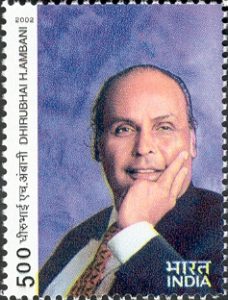
Chorwad, 1949
Dhirubhai was born on 28 December 1932 in Chorwad, a dusty little fishing village in Junagadh district, Gujarat. His father, Hirachand Ambani, taught at the local school and earned approximately ₹90 a month. The family lived in a two-room house. Dhirubhai was the third of five children.
His early life was an unremarkable catalogue of small-town poverty, except for one habit his schoolmasters kept commenting on in whispers: the boy had an almost dangerous level of ambition. He sold chana and bhajiyas at the Saturday mela. He rented out borrowed copies of comic books for an anna a read. At fourteen, he organised his classmates into a syndicate that bought sugarcane wholesale and sold juice at the weekly village fair.
His elder brother Ramniklal was already in Aden — then a British protectorate on the southern tip of the Arabian peninsula, a roaring free-trade port where ships refuelled on their way between Suez and Bombay. Ramniklal worked as a clerk at A. Besse & Co., a French trading house. In 1949, at seventeen, Dhirubhai boarded a ship in Bombay, paid for with money his father had quietly borrowed from a cousin, and joined his brother.
The Petrol Pump Years
Besse & Co. started Dhirubhai as a clerk and, within months, moved him to a petrol pump on the Aden waterfront as the cashier. This is the scene that Indian business folklore has embellished for three quarters of a century. It is mostly true.
What is certainly true: the young Dhirubhai, while running a Shell petrol pump, learned the rudiments of commodity arbitrage by watching dhows from Djibouti, cargo ships from Rotterdam and sailboats from Bombay settle accounts in every major currency of the world. He watched coffee, sugar, cotton, rice and tea change hands in small quantities at two prices — one for locals, one for expatriates — and began quietly making money on the difference.
He also noticed something that changed his economic worldview forever: the Yemeni rial was made of almost pure silver. As silver prices in London began to drift up in the mid-1950s, the intrinsic metal value of a rial coin began to exceed its face value.
Dhirubhai saw an arbitrage. He began quietly melting down Yemeni rials, selling the silver in London through a British metal trader, and pocketing the difference. The margin was small. The volume, over months, was not. He is said to have made his first serious money this way — enough to attract, within weeks, the attention of the Yemeni government, which passed an emergency law banning the practice.
It is the single earliest window into Dhirubhai’s economic instincts: the difference between what something is officially worth and what it is actually worth is where fortunes are made.
1958: Back to Bombay With ₹15,000
By 1958, Dhirubhai is 26 years old, married to Kokilaben, and ready to come home. He lands in Bombay with accumulated savings of around ₹15,000 — a modest sum, but meaningful in a city where a middle-class flat in Bandra cost ₹8,000.
He rents a single office room at 16 Narsinatha Street in Bhuleshwar — three rooms, total area about 250 square feet, shared with a table, a telephone (rare, and an achievement in 1958) and two clerks. The company name is Reliance Commercial Corporation. The business: export of Indian spices to Aden, import of Yemeni yarn to India.
In the first year, Reliance turns over ₹35,000 in profit. Small. But the business has two structural advantages Dhirubhai will later scale relentlessly:
- It uses India’s absurd tariff regime as a feature, not a bug. Indian yarn tariffs are prohibitive, so domestic yarn is artificially expensive, and every import licence is a miniature lottery ticket.
- It moves quickly. A dhow from Aden takes three weeks to reach Bombay. Dhirubhai’s competitors, mostly old Gujarati trading houses, are used to paper contracts and letters of credit. Reliance works on phone calls, handshakes and advance payments.
By 1966, Reliance has moved into polyester yarn. This is the pivot that makes Dhirubhai into Dhirubhai.
Polyester: The Indian Fashion Revolution
In 1966, India is still a cotton country. Saris, shirts, kurta-pyjamas — all cotton, all hand-woven or mill-woven, all expensive to iron and slow to produce. Synthetic fabrics are officially frowned upon (“foreign,” “un-Indian”) and heavily restricted. A polyester sari imported from Japan attracts a duty of 600%.
Dhirubhai’s thesis: the middle-class Indian woman will love polyester. It is lighter than cotton. It drapes better. It dries in hours. It needs no ironing. And, most importantly, it holds bright printed colour in a way cotton never can.
He begins importing polyester yarn, selling it first to small Surat looms, then directly to Mumbai powerlooms. The business compounds at almost 80% a year through the late 1960s.
In 1966 he makes the next leap: he decides to manufacture polyester fabric himself. A mill is set up in Naroda, Ahmedabad, with second-hand machinery and the first branded synthetic fabric launched in India — Vimal. (The name is a portmanteau of his son Mukesh’s middle name and a common Gujarati word meaning pure.)
By 1975, Vimal has a retail footprint in every state in India. By 1980, it is the largest-selling branded fabric in the country.
1977: The IPO That Created the Indian Equity Cult
On 29 November 1977, Reliance Textiles — as it was then called — went public. The issue was priced at ₹10 per share with a ₹10 premium. It was aimed squarely at retail investors.
The Indian stock market in 1977 had around 10 lakh (1 million) investors in total, nearly all of them Parsi, Gujarati or Marwari — an insular, upper-middle-class club. Dhirubhai’s insight, contrarian to the point of heresy, was: this club is too small. The future of Indian equity lies in pulling in people who have never owned a share in their life.
He did two things that reshaped the Indian capital market forever:
- He advertised the IPO like a consumer product. Newspaper ads in Hindi, Gujarati, Marathi, Telugu, Tamil and Bengali. Posters in railway stations. Pamphlets handed out at kirana stores. The language was simple, aspirational and completely free of financial jargon. “Own a piece of Reliance.”
- He priced it low. A lot of 100 shares at ₹10 each was ₹1,000 — exactly one month’s salary for a junior bank clerk in 1977. Dhirubhai understood before anyone else that the Indian middle class wanted a ticket to the dream, not a minimum-lot sophisticated-investor offering.
The issue was seven times oversubscribed. Applications came in from 58,000 investors, many of them filing their first-ever stock market form. The next day’s Hindi press described it as “Ambani ji’s public gift to the country.”
Football Stadiums as AGMs
The Reliance annual general meeting quickly became the largest shareholder gathering in the world. By the mid-1980s, Reliance’s AGM had outgrown every auditorium in Bombay and was being held in Cooperage Football Ground and, later, at Wankhede Stadium. Between 35,000 and 50,000 shareholders would arrive, most in white dhotis and Nehru caps, carrying their original share certificates in transparent plastic folders.
Dhirubhai would speak for exactly twenty minutes without notes. Half in Gujarati, half in Hindi, with the occasional English phrase thrown in for Bombay reporters. He never used a slide. He never discussed the P/E ratio. He spoke about what the company was building, in which town, with whom, and what year the dividends would double.
The AGMs were not corporate events. They were religious congregations. He would distribute sweets to shareholders as they left. The stock, in the following week, would usually rally 5–8%.
“Dhirubhai did not teach Indians to invest. He taught Indians that a poor boy from Chorwad could make them rich. That is a different thing entirely.”
— Udayan Mukherjee, financial journalist
Patalganga: The Backward Integration Bet
Most Indian business history is written about Reliance’s IPOs and political intrigue. Its real moat was built, quietly, in a remote petrochemical complex at Patalganga, about 65 km from Mumbai.
In the early 1980s, Dhirubhai did what no Indian industrialist had ever attempted: he decided to backward-integrate all the way to crude oil. From yarn, Reliance would move to fabric. From fabric, to PTA and MEG (polyester’s two raw materials). From those, to paraxylene. From paraxylene, to aromatics. From aromatics, to naphtha. From naphtha, to crude.
Every single step required a separate government licence — remember, this is pre-liberalisation India. Reliance pursued all of them simultaneously, on timelines that would break most regulatory bodies. Patalganga’s polyester filament yarn (PFY) unit went commercial in 1986 at a capacity of 10,000 tonnes a year. Within five years, the same site was producing 150,000 tonnes annually, the largest single-site PFY plant in Asia.
The cost per tonne of yarn — because Reliance owned every single input — dropped to 40% below the global average. For fifteen years, Reliance could undercut every competitor, everywhere, by that margin. It is the real reason Vimal killed the Indian mill industry.
Jamnagar: The Refinery That Shouldn’t Exist
In 1996, Dhirubhai and his son Mukesh Ambani decide to build a greenfield oil refinery at Jamnagar, on the Gujarat coast about 450 km northwest of Bombay, in a salt desert called Motikhavdi. The scale is ludicrous: 27 million tonnes per year, making it, at the time of commissioning in 1999, the largest grassroots refinery on earth.
Every major global oil major that studies the project — Shell, Aramco, Exxon — concludes it cannot be built. The remote location lacks water, power, roads, port infrastructure, skilled labour. The budget estimate is $6 billion. The construction timeline must not exceed 36 months or the economics collapse.
Mukesh Ambani delivers the project in 33 months, at $6.1 billion, ahead of schedule and within budget. By 2008, an adjacent export refinery doubles the capacity to 60 MTPA. Jamnagar alone, today, processes more crude than all the refineries in France combined.
The project becomes, for a generation of Indian engineers, the proof point that India could execute — and not just trade.
6 July 2002: Breach Candy Hospital
In late June 2002, Dhirubhai suffers his second stroke. He is 69. For ten days, at Breach Candy Hospital, he slips in and out of consciousness. Kokilaben sits by the bedside. Mukesh and the younger son Anil take turns managing the company from a hospital-room setup.
On 6 July 2002, Dhirubhai dies.
Reliance Industries, the company he founded with ₹15,000 in a 250-square-foot Bhuleshwar office, is at the time of his death worth ₹75,000 crore — roughly 5,00,000× the original capital, in 44 years. There are approximately 3.5 million retail shareholders.
The funeral procession takes nine hours to move through Bombay. Shops in Bhuleshwar, Zaveri Bazaar and Dadar close spontaneously. The Bombay Stock Exchange reopens on 8 July 2002 with the Sensex up 80 points — a traditional mark of respect.
Dhirubhai died without leaving a will. The decision would tear his family apart.
The Brothers’ War, and the Split
Between 2002 and 2005, Mukesh and Anil Ambani engage in a publicly humiliating feud over the control of Reliance. Kokilaben, then 70, eventually brokers an out-of-court settlement in June 2005. The empire is split.
- Mukesh keeps the core businesses — oil, gas, petrochemicals, refining. The flagship Reliance Industries.
- Anil takes the newer ventures — telecom (Reliance Infocomm, later Reliance Communications), power (Reliance Energy), financial services (Reliance Capital), and infrastructure (Reliance Infrastructure).
Over the next fifteen years, the two paths diverge catastrophically. Mukesh’s companies compound — Reliance Industries reaches a market cap of over ₹20 lakh crore by 2024, making it the most valuable company in India. Anil’s, saddled with debt and missed telecom bets, progressively collapse — by 2020, Anil tells a UK court he is effectively bankrupt.
The divergence is the single starkest case study in Indian business history of the importance of capital discipline: same father, same DNA, same early training, wildly different outcomes depending on whether you reinvest in high-return businesses or chase category expansion with borrowed money.
The Numbers Story
Consider a hypothetical: a junior LIC clerk in Mumbai buys 100 shares of Reliance Textiles at the 1977 IPO for ₹1,000. Holds through everything — the bonuses, the splits, the partly-paid conversions, the demergers of the AAA-rated companies in 2006, the 2017 1:1 bonus.
By 2024, that 1977 ₹1,000 investment is worth approximately ₹23 crore, plus another ~₹3 crore of dividends received along the way. A CAGR of approximately 25% over 47 years. Unlevered. Untraded. A straight hold.
There are, today, retired bank clerks, school principals and Railway ticket collectors in Maharashtra, Gujarat and Tamil Nadu whose children are in Boston and London because grandpa applied for a 1977 Reliance IPO and never sold.
What Dhirubhai Changed Forever
- He made equity democratic. Before 1977, the Indian share market was a closed club. After Reliance, it was a national aspiration. The modern retail investor culture — the auto driver with a Demat account, the plumber who asks about the Budget — has its unmistakable root in a Gujarati polyester IPO.
- He proved that scale beats subsidy. Reliance competed in every business that was “reserved” for the public sector and won on cost. Patalganga made polyester cheaper than any state-owned NTC mill. Jamnagar made refining cheaper than any IOC or HPCL facility. Both were built by private equity capital, end to end.
- He taught India to think in decades, not quarters. Dhirubhai’s investment horizons were never less than five years. Patalganga was a 15-year project. Jamnagar was a 25-year thesis. Reliance Jio (Mukesh’s ₹4 lakh crore telecom bet, fully formed only in 2016) was, in character, pure Dhirubhai.
- He understood the shareholder as a stakeholder. Reliance’s 35,000-person AGMs were not theatre. They were the world’s first corporate equivalent of a democratic rally. Every shareholder, however small, was treated as a co-owner. It is a model the rest of Indian industry has copied imperfectly ever since.
“Think big, think fast, think ahead. Ideas are no one’s monopoly.”
— Dhirubhai Ambani, 1990 AGM, Cooperage Football Ground
In the filing cabinet of every Indian business school case-study library, Dhirubhai Ambani has one entry larger than any other. It is not his financials. It is not the Jamnagar refinery blueprints. It is a single page, dated 29 November 1977, containing the names of 58,000 small Indian investors who decided — on the recommendation of a Gujarati man they had never met, in a language they could read, for a business they did not fully understand — to put their first ₹1,000 into a share called Reliance.
They taught themselves equity. And he taught the country.