
Amalner – How Wipro Made a Village of Millionaires

Drive four hours east of Mumbai and you arrive in Amalner — a dusty little town in western Maharashtra where shopkeepers, schoolteachers and retired clerks quietly became crorepatis. They never learned to read a balance sheet. They simply never sold.
The Village That Forgot to Sell
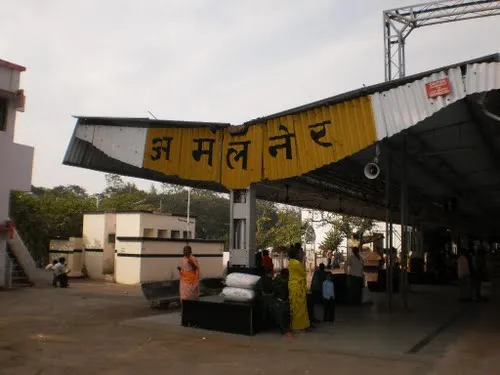
No skyscrapers, no stock tickers on café walls, no glass towers. And yet, by one widely cited estimate, the residents of this small Khandesh town collectively own close to 3% of Wipro Limited — worth several thousand crore rupees. That is, arguably, more crorepatis per square kilometre than Malabar Hill.
How did that happen? The answer is a seventy-five-year story about one family, one factory, and a lot of people who simply refused to sell.
1945: Oil, Soap, and a Family That Stayed
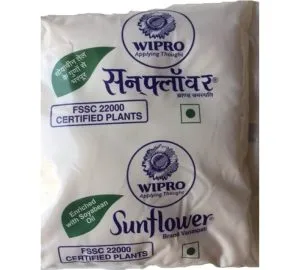
The story begins not with software, but with cooking oil. In 1945, a rice trader named Mohamed Hussain Hasham Premji set up a small factory on the outskirts of Amalner. He called it Western India Vegetable Products Limited — a mouthful that would one day shrink to a four-letter word the world knows: WIPRO. The factory crushed groundnuts, bottled Vanaspati ghee under the brand “Sunflower,” and turned the by-product into a laundry soap called “787.”
Two years later, the subcontinent split in two. Muhammad Ali Jinnah, a family friend, personally invited the Premjis to come to Pakistan and take charge of its industries. Hasham Premji politely declined. He stayed in Amalner, with his oil mill and his soap.
“My father chose India. That one decision, more than any other, is the reason this company exists.” — Azim Premji, recalling 1947
When Hasham Premji died suddenly in 1966, his 21-year-old son Azim was pulled out of Stanford and put on a plane home to run a sleepy vanaspati business worth around ₹3 crore. At his first shareholder meeting, an irritated investor publicly told him to sell the company to someone who knew what he was doing. Azim held his tongue — and the shares.
The IPO Nobody Wanted
In the late 1970s, Wipro tapped the public market. The IPO was undersubscribed. Bombay’s brokers couldn’t be bothered with a small-town soap company from Khandesh.
For nearly a decade after listing, Wipro shares effectively traded only in Amalner itself — passed around between the town’s merchants, school teachers, and factory workers. The share price appeared in the newspapers roughly once every fifteen or twenty days, and often the quote was a polite fiction because no trade had actually occurred.
In this obscurity, something quietly miraculous was compounding.
The Millionaires Nobody Noticed
#1 Shantilal Jain — The Man Who Refused a Small Loss
Shantilal Jain, a local businessman, bought a parcel of Wipro shares at the face value of ₹100. Soon after, the price slid to ₹35. His friends advised him to cut the loss. He shrugged and filed the certificates away in a cupboard.
“Its price fell below the face value and there were no buyers even at Rs 35. Rs 100 at that time was not a small amount and it was not easy to sell it at a loss. So I decided to hold the share.” — Shantilal Jain
Four decades of bonus issues and stock splits later, that stubborn refusal to sell at a 65% loss was worth around ₹5.5 crore.
#2 Zahoor Ahmed Haji Sheikh Masoom — Five Shares and a Memory
Zahoor Ahmed, 65, the patriarch of a 32-member family, is a retired headmaster whose father was a tobacco merchant and also sold Wipro products. “Mohammad Seth — Azim Premji’s father — used to come to our shop,” he recalls, smiling through the doorway at his curious grandchildren. “That’s how we took those shares.”
In 1947, Zahoor’s father paid ₹500 for five Wipro shares at ₹100 each. Through successive bonuses, splits and the odd family trade, those five certificates quietly multiplied to around 70,000 shares, worth more than ₹10 crore. Today, Zahoor and his brothers — all except Kamil, who works for Wipro — lead a contented retired life.
“He (Azim Premji) is a Kohinoor. He deserves to flourish. With his growth we will also grow. Azim Seth ne Amalner ka naam bahut uncha kiya.” — Zahoor’s younger brother, Manzoor Ahmed
#3 The Commerce Professor Who Built a Hospital
A retired commerce teacher in Amalner — the kind of man who lectured in the mornings and kept a small stock ledger at home — sold all but 50 of his Wipro shares in the 1990s. With the proceeds he built a ₹13.5 lakh hospital for his son. The hospital is named, aptly, Wipro House, because every brick was paid for by Wipro share earnings.
He did not sell the remaining fifty.
The Legend: ₹10,000 to ₹500+ Crore

This is a story originally narrated in Prudent Equity, built around an Amalner resident named Mohammed Anwar Ahmed whose father owned a large farmland in the 1970s. Treat it, as good legends deserve, with a pinch of salt — but the bonus-and-split arithmetic below is factually Wipro’s.
After his father’s death, Anwar Ahmed was left with roughly ₹20,000. One afternoon in 1980, as he sat near a tea shop, a young stock broker from Mumbai stopped and asked a question that would change his life: “Do you know anyone here who owns shares in that factory?” — pointing at the Wipro plant.
Over the next thirty minutes, the broker explained how owning a share made you a part-owner of the business without ever having to work for it. Convinced, Ahmed spent the afternoon walking the broker door-to-door (in small towns, everyone knows everyone) and, for himself, bought 100 Wipro shares at ₹100 face value — investing ₹10,000 of the ₹20,000 he had.
Then he did the single hardest thing an investor can do: he did nothing. For thirty-three years.
How 100 shares became 96,00,000
- 1981: 1:1 bonus → 200 shares
- 1985: 1:1 bonus → 400 shares
- 1986: share split (₹10 FV) → 4,000 shares
- 1987: 1:1 bonus → 8,000 shares
- 1989: 1:1 bonus → 16,000 shares
- 1992: 1:1 bonus → 32,000 shares
- 1995: 1:1 bonus → 64,000 shares
- 1997: 2:1 bonus → 1,92,000 shares
- 1999: share split (₹2 FV) → 9,60,000 shares
- 2004: 2:1 bonus → 28,80,000 shares
- 2005: 1:1 bonus → 57,60,000 shares
- 2010: 2:3 bonus → 96,00,000 shares
At a share price of ₹463.85, the 96 lakh shares were worth roughly ₹445 crore. On top of that, Wipro’s steady dividends had dropped another ₹120+ crore into his account over the years.
An investment of ₹10,000 had turned into ₹550+ crore. Nothing had been done with it — except patience.
Wipro Is More Than a Company
For the people of Amalner, Wipro is something more than a corporation. None of them would ever want to let go entirely, regardless of what analysts say. Indeed, one popular saying in town is that if you buy 10 Wipro shares the day your child is born, it will earn enough over the years to pay for the child’s higher education or marriage.
It is said only half-jokingly. For generations of Amalner parents, it has been a perfectly reasonable financial plan.
What the Village Teaches the Market
Amalner is not a story about brilliance. None of its millionaires read annual reports. None of them timed the 1991 reforms or spotted the IT boom. None of them had a bearish thesis on vanaspati or a bullish one on global software outsourcing.
What they had was something rarer: the ability to not act. To hold through a 65% drawdown. To ignore twenty years of illiquidity. To forget a share certificate at the bottom of a cupboard for three decades while life went on.
The greatest fortunes in Indian equity history were not made by the sharpest traders. They were made by people who bought one good business — and then stopped being clever.
Three Lessons from Amalner
- Proximity beats pedigree. Amalner’s residents knew Wipro better than any Bombay broker. They watched the factory gates, knew the managers, saw the trucks roll out. Your circle of competence often hides in plain sight.
- Illiquidity can be a feature, not a bug. Because the shares barely traded, shareholders couldn’t panic-sell. That forced patience became a multi-generational gift.
- The hardest trade is the one you don’t make. Every one of these investors had decades of reasons — fear, greed, emergencies — to exit. The ones who stayed are the ones we still talk about.
Somewhere in Amalner today, a grandfather is probably pushing a birth certificate across a broker’s desk and quietly asking for ten shares of Wipro. He is not being sentimental. He is doing math.
Is Mohammed Anwar Ahmed real person? How can I meet him?
No, we think the person is fictional as we’ve already mentioned in the post.
[…] pay tax on dividends directly to the Government before issuing the dividend). Here you can read another story where some investors are not planning to sell their stocks any soon and enjoying hefty […]
[…] pay tax on dividends directly to the Government before issuing the dividend). Here you can read another story where some investors are not planning to sell their stocks any soon and enjoying hefty […]
[…] pay tax on dividends directly to the Government before issuing the dividend). Here you can read another story where some investors are not planning to sell their stocks any soon and enjoying hefty […]
I am interested in Wipro vanaspati to whom I want to contact our location in kerala Trivandrum
X